
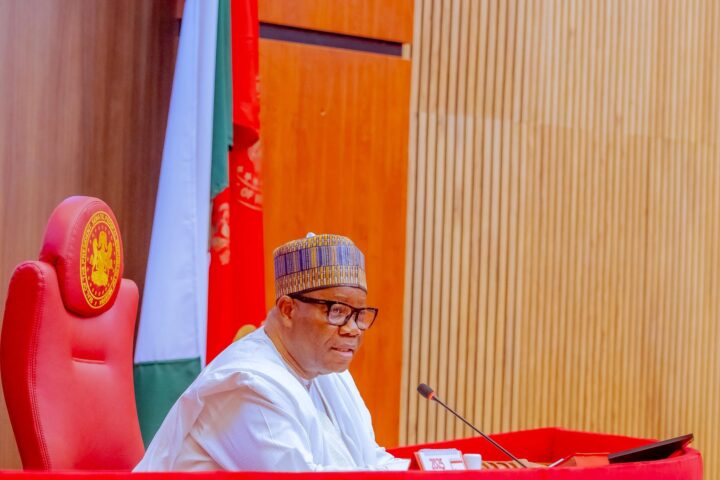
Akpabio, David Mark clash over amendment to Electoral Act on electronic transmission of results
Senate President Godswill Akpabio has said the Senate did not abolish electronic transmission of election results but only retained the provision as contained in the Electoral Act 2022, amid controversy over amendments to the law.
The clarification followed the Senate’s decision on February 4 to reject a proposal that sought to make real time electronic transmission of results mandatory under the Electoral Act Amendment Bill 2026. Instead, lawmakers upheld the existing clause that allows electronic transmission without making it compulsory.
The rejected amendment would have required the Independent National Electoral Commission, INEC, to transmit results electronically in real time and upload them directly to the commission’s result viewing portal, IReV. Under the current law, electronic transmission is permitted but not compulsory, with manual collation still recognised.
The Senate’s action triggered public criticism and renewed concerns about electoral transparency.
Speaking in Abuja at the launch of a book titled The Burden of Legislators in Nigeria by former senator Effiong Bob, Akpabio said claims that the Senate had removed electronic transmission were misleading.
He said the only change made by lawmakers was the removal of the phrase “real time,” arguing that insisting on it could invalidate elections in areas affected by network or power failures.
“I must state clearly, without ambiguity, that the Senate has not removed any means of transmission,” Akpabio said.
According to him, political parties and election officials remain free to transmit results using any available means, including electronic devices, depending on prevailing conditions.
He added that making real time transmission compulsory could create legal and logistical challenges, especially in areas facing insecurity, poor network coverage or national grid collapse.
Akpabio said the Senate’s intention was to give INEC the flexibility to decide the most appropriate method of transmitting results, taking into account Nigeria’s technological and security realities.
Reacting to the Senate president’s explanation, former Senate President and African Democratic Congress chairman, David Mark, said lawmakers should not speak on behalf of INEC.
Mark said it should be left to the electoral body to determine whether it is capable of transmitting results electronically in real time.
“Let INEC decide whether they can do it or not. Do not speak for INEC,” he said.
He added that public demand remains focused on transparent elections and that debates over procedure should not distract from that core expectation.


