Can Democracy Truly Thrive When Votes Are for Sale?
BY OSUNLOLA INIOLUWA OLATILEWA
The conduct of elections remains one of the strongest indicators of the health of any democracy. In Nigeria, however, the persistent challenge of vote buying continues to undermine the integrity of the electoral process, raising serious concerns about the future of democratic governance. The governorship election held in Ekiti State has once again brought this troubling issue to the forefront of national discourse.
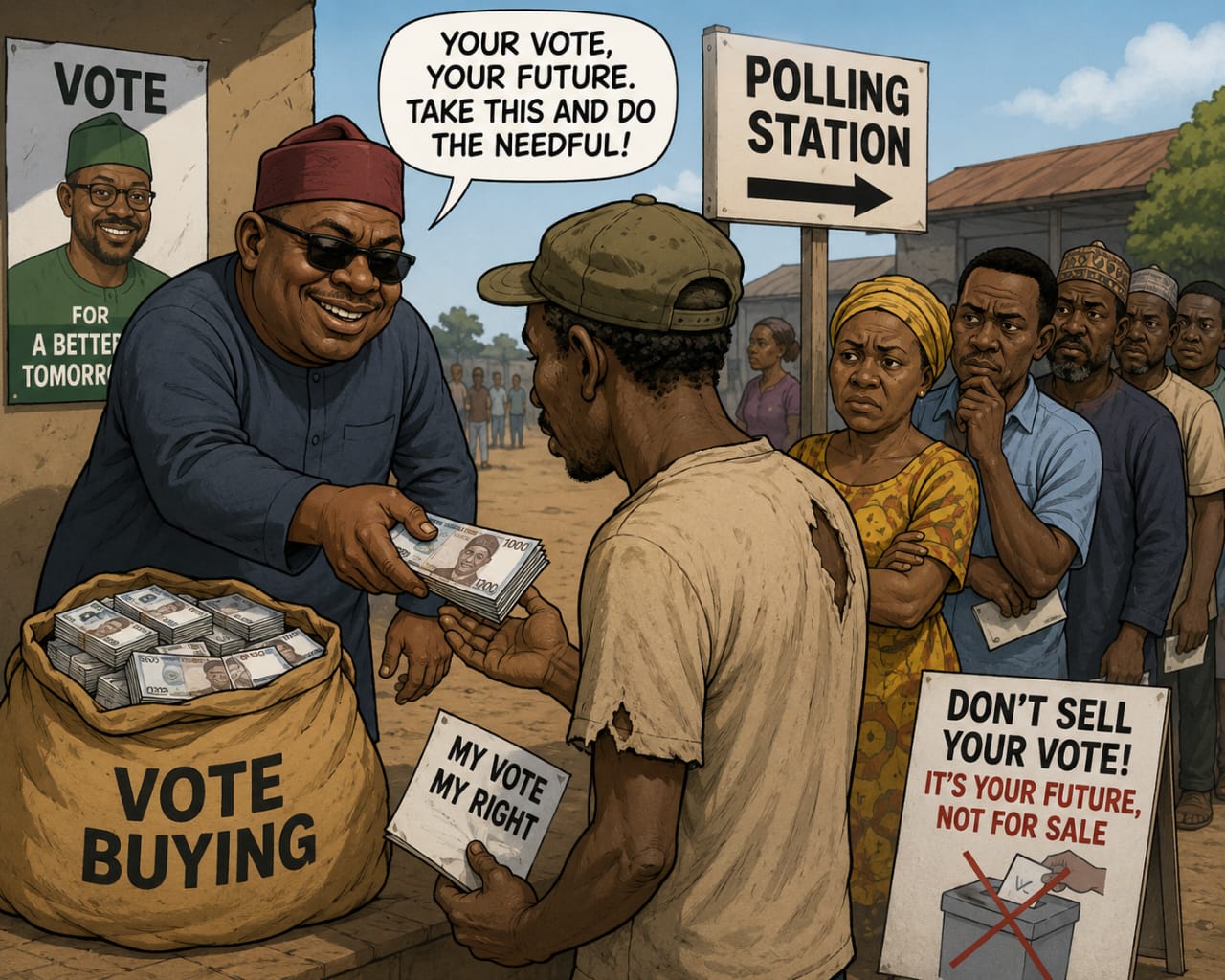
While elections are meant to provide citizens with an opportunity to freely choose their leaders, the growing influence of money in Nigeria’s electoral process has continued to distort this democratic ideal. Reports and observations from recent elections have repeatedly highlighted how political actors deploy financial inducements to influence voters, turning what should be a contest of ideas into a marketplace of votes.
The Ekiti governorship election serves as another reminder that vote buying remains one of the greatest threats to Nigeria’s democracy. Beyond the exchange of cash, political actors have become increasingly sophisticated in their methods, offering various incentives aimed at securing electoral support. Such practices compromise the credibility of elections and weaken public confidence in democratic institutions.
More troubling is the gradual normalization of vote buying among both politicians and voters. For many citizens facing economic hardship, the temptation of immediate financial gain often overshadows the long-term consequences of electing leaders based on monetary inducements rather than competence, integrity, and vision. Yet the reality remains that the temporary benefits received during elections often result in years of poor governance and unfulfilled promises.
Ekiti State has over the years become a significant reference point in discussions surrounding electoral inducement in Nigeria. Successive elections in the state have attracted national attention due to recurring allegations of vote buying, making it a useful case study in understanding the broader challenges facing the country’s electoral system.
The implications of vote buying extend beyond election day. Leaders who emerge through financial inducement may feel less accountable to the electorate and more focused on recovering campaign expenditures. This often leads to poor policy decisions, corruption, weakened institutions, and a disconnect between government and the people.
Addressing this challenge requires a collective effort. Electoral bodies must strengthen monitoring and enforcement mechanisms. Security agencies must ensure that electoral laws are applied without fear or favour. Political parties must embrace issue-based campaigns, while civil society organizations and the media must continue to educate citizens on the dangers of selling their votes.
Ultimately, the responsibility also lies with the electorate. Democracy flourishes when citizens make informed decisions based on the character, competence, and capacity of candidates. A vote is not merely a piece of paper; it is a powerful instrument for shaping the future of society.
As Nigeria continues its democratic journey, the question remains: Can democracy truly thrive when votes are for sale? The answer depends on the willingness of all stakeholders to protect the sanctity of the ballot and ensure that elections reflect the genuine will of the people rather than the influence of money.
Only when votes are cast freely and counted fairly can democracy achieve its true purpose of serving the people and advancing national development.