
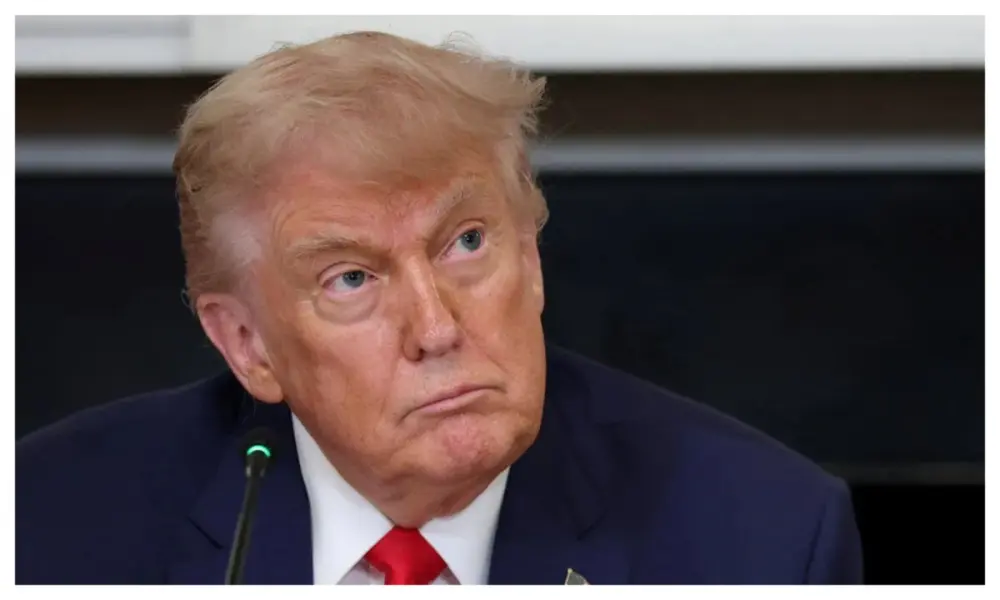
Trump hints at scaling down Iran war as US eases oil sanctions
Donald Trump has said he is considering winding down military operations against Iran, as the United States moves to temporarily relax sanctions on Iranian oil exports in response to a growing global supply crunch.
In a post on Truth Social, Trump noted that the US was “getting very close” to achieving its objectives, describing the potential drawdown as part of efforts to conclude what he called successful military operations in the Middle East. His remarks mark the clearest signal yet that Washington may be preparing to end hostilities that began on February 28.
Shortly after, White House Press Secretary Karoline Leavitt said the administration and the Pentagon had projected a timeline of four to six weeks for the mission. With the conflict now in its third week, she said US forces were making significant progress in weakening Iran’s military capacity.
Amid rising concerns over oil prices, the US Treasury announced a temporary easing of sanctions on Iranian oil already loaded onto ships before March 20. The measure, which runs through April 19, is expected to release about 140 million barrels of crude into global markets.
Treasury Secretary Scott Bessent said the move would help stabilise energy supply and ease pressure caused by disruptions linked to the conflict.
Tensions in the region have continued to escalate. Iran launched fresh drone and missile attacks targeting Saudi Arabia and Israel, while also striking key energy facilities across the Gulf.
The situation has been worsened by Iran’s effective blockade of the Strait of Hormuz, a vital route for about 20 percent of global oil and gas supply. The disruption has driven crude prices higher, with Brent oil rising above $112 per barrel.
Explosions were reported in Tehran, while Israel accused Iran of targeting religious sites in Jerusalem after a strike near the Al-Aqsa Mosque, the Western Wall, and the Church of the Holy Sepulchre.
Saudi authorities said they intercepted more than 20 Iranian drones, while further missile launches from Iran were reported. Attacks also hit major facilities including Kuwait’s Mina Al-Ahmadi refinery and Qatar’s Ras Laffan gas plant.
Meanwhile, Israeli forces carried out strikes in Beirut targeting Hezbollah positions, while Turkey condemned Israeli attacks on Syrian military sites, calling them a “dangerous escalation.”
Despite hinting at a possible de-escalation, Trump ruled out a ceasefire, insisting the US held the upper hand. He also called on other nations to take responsibility for securing the Strait of Hormuz, though he said Washington would assist if necessary.
Trump added that diplomatic engagement with Iran remains difficult, citing the absence of key leadership figures following the deaths of senior officials, including former supreme leader Ali Khamenei.
In a Nowruz message, Iran’s current leader Mojtaba Khamenei claimed the country had delivered a major blow to its enemies and declared that Iran had effectively prevailed in the confrontation.
While the US has avoided deploying ground troops, reports indicate that between 2,200 and 2,500 additional American Marines may be heading to the region as tensions remain high.


