Abdulsalami Explains Why He Returned Nigeria to Civilian Rule Within 11 Months
Former Head of State, Abdulsalami Abubakar, has explained that his decision to hand over power to a democratically elected government in 1999 was driven by both political necessity and moral responsibility.
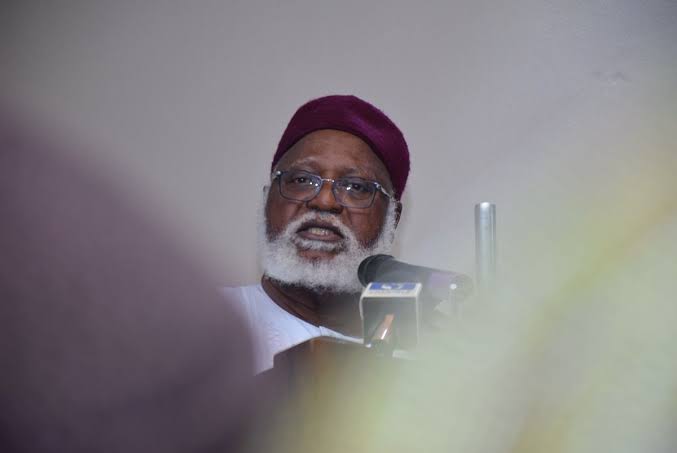
Speaking at the celebration of his 84th birthday and the public presentation of three books documenting his life and contributions to nation-building, Abdulsalami said Nigeria was deeply divided and yearning for democracy when he assumed office following the death of former military ruler Sani Abacha in June 1998.
The event, held at State House and themed “The Legacy of a Statesman @ 84,” featured the unveiling of his autobiography, A Call of Duty: My Autobiography, alongside two other publications honouring his legacy.
Abdulsalami, who led Nigeria for 11 months between June 1998 and May 1999, said the country was at a critical crossroads when he took over.
“History is a way of defining the destiny of nations through critical moments,” he said. “When I assumed office as Head of State in 1998, Nigeria stood at a crossroads, a nation yearning for stability, democracy and good governance.”
According to him, widespread demands for a return to civilian rule came from political leaders, civil society groups, the international community and ordinary Nigerians who had grown weary of prolonged military rule.
He said his administration immediately committed itself to a swift democratic transition, working with the Armed Forces Ruling Council, the Federal Executive Council, military authorities and the media to deliver on that promise.
“We had to depart from the era of decrees and fashion out workable constitutional arrangements to legitimise the transition from military rule to democratic governance,” he said.
The former military ruler stressed that leadership should be defined by service rather than the exercise of power.
“Leadership is not about power but about responsibility, and the best way to lead is to serve with integrity,” he added.
Abdulsalami noted that within 11 months, his administration successfully conducted the transition programme that culminated in the inauguration of Olusegun Obasanjo as civilian president on May 29, 1999, ending more than 15 years of uninterrupted military rule.
“This was not just a political necessity but a moral imperative to set our nation on the path of stability, unity and progress,” he said.
Autobiography Revisits Key Moments in Nigeria’s History
The former leader said his autobiography provides a firsthand account of major events that shaped Nigeria’s political trajectory, including the fallout from the annulment of the 1993 Nigerian presidential election, military coups between 1966 and 1993, the Nigerian Civil War, the deaths of Abacha and Moshood Kashimawo Olawale Abiola, and the making of the 1999 Constitution.
He also highlighted his post-retirement efforts in peacebuilding and conflict resolution across Africa, noting that these initiatives led to the establishment of the Abdulsalami Abubakar Institute for Peace and Sustainable Development Studies and the Abdulsalami Abubakar Resource Centre.
“Peace is not the absence of conflict but the presence of justice,” he said.
Abdulsalami further commended members of the National Peace Committee, which he chairs, for promoting peaceful elections and democratic stability through dialogue among political actors, civil society organisations and security agencies.
He urged political leaders, traditional rulers, religious institutions and the media to continue promoting peace, justice and national unity.
Another highlight of the event was the unveiling of the Abdulsalami Abubakar African Resource Centre by former Senate President Pius Anyim. The centre is expected to serve as a hub for research and documentation on leadership, governance, peacebuilding and democratic development across Africa.