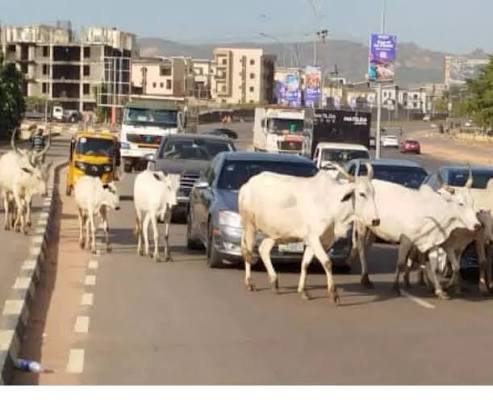
FG plans digital registration of cattle, livestock to curb rustling
The Federal Government says it is planning to introduce a digital registration system for cattle and other livestock as part of measures to tackle cattle rustling and improve livestock management.
Idi Maiha, Minister of Livestock Development, disclosed this on Tuesday after briefing President Bola Tinubu on the ministry’s activities and the implementation of the national ranching policy at the State House in Abuja.
Maiha said the proposed system would involve fitting cattle and other four-legged livestock with electronic ear tags containing identification, geolocation and ownership information.
According to him, the electronic identification system would form part of a national livestock database, allowing authorities to identify and track animals, establish ownership and trace livestock that stray or are stolen.
He described the initiative as part of the government’s non-kinetic approach to addressing insecurity in rural communities, particularly cattle rustling.
The minister said the system would also support the government’s broader plan to modernise livestock production and move the sector away from traditional practices.
FG to convert 417 grazing reserves into livestock communities
Maiha said the electronic identification programme was being developed alongside plans to rehabilitate 417 grazing reserves and transform them into integrated livestock communities.
He said the ranching programme would begin with a pilot project in Plateau State before being extended to Benue, Nasarawa, Kaduna and Adamawa states, as well as the Federal Capital Territory.
According to the minister, the locations were prioritised because of their history of farmer-herder clashes.
He said the ranching strategy would reduce the movement of large herds by providing pasture, water, veterinary services and other infrastructure within designated livestock settlements.
“Why don’t you provide these resources in situ and stop these animals from moving? Human beings can move; they don’t cause crisis. It’s the animals’ movement that normally generates this crisis,” he said.
Maiha said traditional livestock production had become increasingly difficult to sustain due to the loss of grazing routes to agriculture, urbanisation and infrastructure development.
He stressed that the proposed grazing reserves would be developed as economic communities rather than simply places to confine cattle.
The facilities, he said, would include housing, primary schools, healthcare centres, veterinary clinics, solar power installations and earth dams for irrigation and pasture production.
The government also expects the concentration of livestock in the reserves to attract private investment in milk production, dairy processing, meat processing and other areas of the livestock value chain.
Government targets livestock sector overhaul
Maiha said the ministry was also promoting improved livestock breeds and commercial pasture cultivation to increase productivity.
He said improved breeds would enable pastoralists to keep fewer animals while producing more milk and meat.
According to him, pasture would either be cultivated within livestock settlements or harvested elsewhere and transported to ranches.
The ministry is also working to modernise veterinary services, dairy production, abattoirs, fodder cultivation and vaccine storage.
Maiha said seven model veterinary clinics had already been established, with a long-term plan to establish at least one model veterinary hospital in every state.
He added that the government was developing off-grid cold-chain facilities to ensure animal vaccines were properly stored and transported.
The minister said the government was encouraging investment in modern abattoirs to replace open slaughter facilities.
He also disclosed that discussions were ongoing with local investors and development partners on large-scale dairy projects, while commercial fodder production was being promoted for both domestic and export markets.
For the poultry sector, Maiha said the ministry was considering large-scale importation of hatchable eggs as a short-term measure to address shortages and reduce delays for poultry producers seeking day-old chicks.