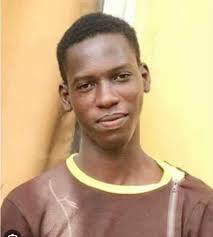
Postmortem confirms journalist Pelumi Onifade died from gunshot injury
A postmortem examination conducted at the Lagos State University Teaching Hospital (LASUTH) has confirmed that journalist Pelumi Onifade died from a firearm injury to the abdomen that caused massive internal bleeding.
The Media Rights Agenda (MRA) disclosed this in a statement on Thursday, September 17, following the submission of the postmortem report to the Coroner Court investigating Onifade’s death.
Onifade, a young journalist with Gboah TV, was reportedly shot and arrested by security operatives on October 24, 2020, while covering the #EndSARS protests in Lagos State.
According to the nine-page postmortem report cited by MRA, the firearm projectile entered through the lower back and caused extensive damage to Onifade’s abdominal region.
The report, signed by Sunday Sokunle Soyemi, a professor and consultant pathologist, on July 30, 2026, listed the cause of death as “massive haemoperitoneum” and “penetrating firearms injury to the abdomen.”
Massive haemoperitoneum refers to the accumulation of a large quantity of blood in the abdominal cavity, usually resulting from severe internal injuries.
The report also found “bony spicules embedded in soft tissue of abdomen,” which MRA said was consistent with a penetrating firearm injury. It also recorded a fracture of the fifth lumbar vertebra.
According to the report, the projectile travelled in a “posterior-to-anterior, right-to-left and infero-superior” direction, indicating that it entered through the back and travelled towards the front, from right to left and from a lower to a higher position.
MRA said the autopsy was conducted on November 4, 2020, at the LASUTH morgue by Soyemi, with John Oladapo Obafunwa, a professor and supervising consultant, in attendance.
The body examined was tagged number 1385 and was later identified as Onifade through DNA analysis by the Lagos State DNA and Forensic Centre.
MRA said the report concluded that the forensic medical evidence showed that the fatal injuries resulted from a firearm projectile entering the abdominal region and causing extensive internal damage and haemorrhage.
Coroner’s inquest
The postmortem report was submitted to the Coroner Court investigating Onifade’s death following a series of court proceedings over the production of the forensic evidence.
The inquest was convened after the Federal High Court in Lagos ordered the Lagos State Government to investigate the circumstances surrounding Onifade’s death and conduct a coroner’s inquest.
The order followed a suit filed by MRA against the Lagos State Government and the Nigeria Police Force over the journalist’s death.
In a judgment delivered on July 19, 2024, Justice Ayokunle Faji directed the Attorney-General of Lagos State to take necessary steps to investigate the circumstances of Onifade’s death and conduct a coroner’s inquest to determine the cause of death and identify and prosecute those responsible.
The inquest has since been marked by delays in the release of forensic documents.
On June 5, 2026, the Coroner Court sitting in Lagos ordered LASUTH and the Lagos State DNA and Forensic Centre to submit the outstanding autopsy and DNA reports relating to body number 1385 within 21 days.
The order was made by investigating magistrate Temitope Oladele after counsel to Onifade’s family and MRA, Alimi Adamu, urged the court to compel the institutions to produce the documents.
At the hearing, MRA said LASUTH had previously confirmed that an autopsy was conducted on the unidentified body tagged 1385, while DNA samples had been collected from the remains and Onifade’s parents for identification.
The coroner’s order followed an earlier failure by LASUTH to produce the autopsy report.
A March 24, 2026 report by the hospital had confirmed that autopsies were conducted on six bodies brought to its facility on November 3, 2020, including body number 1385, and that DNA samples had been processed for identification.
However, LASUTH did not produce the autopsy report or send a representative to the March 24 sitting, prompting MRA’s legal team to ask the court to commence contempt proceedings against the hospital.
The coroner instead gave LASUTH another opportunity to comply and later ordered the hospital to submit the report within 21 days.