
IEA Warns of Global Impact After Failed US–Iran Peace Talks
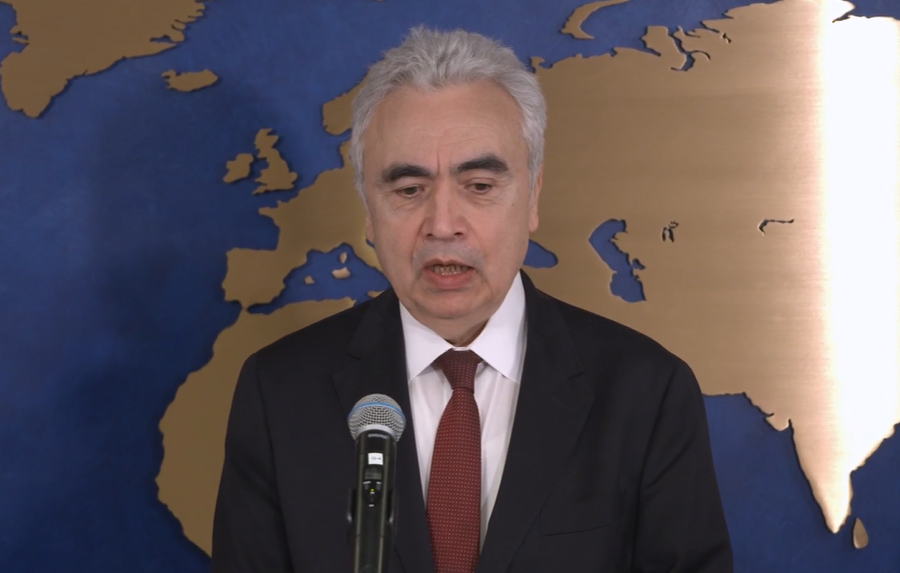
Fatih Birol, executive director of the International Energy Agency (IEA), has warned that countries around the world could face severe consequences if the Middle East conflict continues and the Strait of Hormuz remains closed.
He stressed that nations should prepare for “difficult times in the energy market,” noting that no country is immune to the effects of the ongoing crisis.
Birol made the remarks during a meeting involving the International Monetary Fund (IMF) and the World Bank Group (WBG) on Monday, held on the sidelines of the IMF–World Bank Spring Meetings in Washington, DC. The session focused on assessing the conflict’s impact on the global economy and forms part of a coordination effort launched in early April to strengthen institutional responses to the crisis.
His warning follows the collapse of peace talks between the United States and Iran in Pakistan, which ended without an agreement.
Subsequently, US President Donald Trump threatened that the US Navy could impose a blockade on vessels entering or leaving the Strait of Hormuz.
Describing the situation as unprecedented, Birol said the world is facing “the greatest energy security challenge in history,” affecting not only oil and natural gas but also essential commodities such as fertilisers, petrochemicals, and helium.
“The scale of the problem is huge, and countries will suffer, some more than others, but no nation is immune,” he said.
He noted that March was already a difficult period for global energy and economic stability, warning that April could be worse.
According to him, many of the supplies received in March had been shipped before the crisis began, while disruptions in April mean fewer new cargoes are entering the market.
“The longer the disruption lasts, the more severe the problem becomes,” he added.
Birol revealed that the IEA is currently monitoring over 80 energy facilities across the region, including oil and gas fields, refineries, and terminals, many of which have been targeted in the conflict.
He stated that about one-third of the affected facilities have sustained severe damage, and even after the crisis ends, recovery to pre-conflict production levels could take considerable time.
He also disclosed that IEA member countries have released 400 million barrels of oil, the largest release in history, to stabilise the market.
While the intervention helped reduce prices by nearly $20 when announced in March, Birol emphasised that it is only a temporary measure.
“This is not the solution; it is only reducing the pain,” he said, reiterating that the long-term solution lies in reopening the Strait of Hormuz fully to global trade.


